Investors / Quant
Ken Griffin
United States
20th-century American hedge-fund founder and market-infrastructure builder
Built Citadel into a top-tier fund and Citadel Securities into the dominant U.S. market maker
Understanding market structure is no longer optional — it directly affects your returns
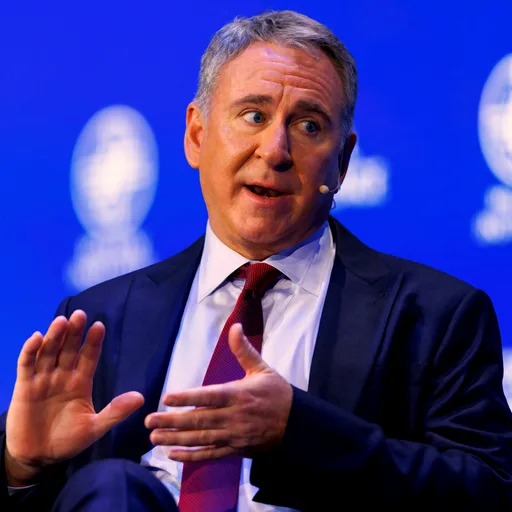
Born in 1968 in Florida, Ken Griffin founded Citadel and built it into one of the world's preeminent hedge funds and market makers. He began trading convertible-bond arbitrage from his Harvard dormitory room and grew Citadel Securities into a firm that handles roughly a quarter of all U.S. equity trades, making him a defining figure in modern financial-market infrastructure.
What You Can Learn
Griffin's career offers two practical takeaways for today's investors. First, understanding market structure directly improves investment outcomes. Citadel Securities provides the liquidity behind the online brokerages that millions of retail investors use every day. Knowing how your order is actually executed — the difference between limit and market orders, the role of bid-ask spreads — translates into cost savings that compound over a lifetime. Second, Griffin's recovery from the 2008 crisis illustrates the importance of resilience and risk management. For individual investors, surviving a severe drawdown without capitulating requires an adequate cash reserve and pre-established rules for how to respond under stress. Just as Griffin reinforced Citadel's risk controls after the crisis and came back stronger, the habit of learning from setbacks and upgrading one's process is what sustains long-term investment success.
Words That Resonate
Life & Legacy
Ken Griffin occupies a rare position in finance: he built both a top-tier hedge fund and a dominant market-making operation within a single organization, shaping the very structure of modern capital markets. Citadel's asset-management arm and Citadel Securities each rank among the leaders in their respective domains, testifying to Griffin's organizational ambition.
Born in October 1968 in Daytona Beach, Florida, Griffin showed early aptitude for mathematics and markets. While a student at Harvard in 1987, the 19-year-old began trading convertible-bond arbitrage from his dormitory room. A widely retold anecdote has him installing a satellite dish on the dormitory roof to receive real-time market data — a founding myth that captures the resourcefulness behind Citadel's origins. By graduation he had already compiled a credible track record.
In 1990, at 22, Griffin launched Citadel Investment Group in Chicago with roughly 4.6 million dollars in initial capital. The firm started with quantitative convertible-bond-arbitrage strategies, refining an approach that extracted profits from pricing dislocations. Over the following decades Citadel expanded across equities, fixed income, commodities, and credit, evolving into a multi-strategy hedge fund whose assets under management have grown into the tens of billions.
The 2008 financial crisis tested Citadel severely. Its main fund suffered a drawdown of approximately 55%, and the firm was forced to impose redemption restrictions. Griffin, however, engineered a recovery; from 2009 onward performance rebounded strongly. That comeback is widely cited as evidence of his risk-management discipline and organizational resilience.
What further distinguishes Citadel is Citadel Securities, its market-making subsidiary. The firm reportedly handles roughly a quarter of U.S. equity-market volume, providing liquidity on the other side of orders placed by retail investors through online brokerages. This business model is closely linked to payment for order flow (PFOF). During the 2021 GameStop saga, the relationship between Citadel's market-making and hedge-fund operations became a focus of public scrutiny. Griffin testified before Congress, asserting the independence of the two businesses and catalyzing a broader debate on market structure.
Griffin's investment approach blends quantitative and fundamental analysis. Citadel invests heavily in technology infrastructure to pursue speed and precision in trade execution while also maintaining deep macro-economic and company-level research capabilities. Griffin recruits aggressively, drawing talent from finance, technology, mathematics, and physics.
Philanthropically, Griffin has donated substantial sums to education, healthcare, and the arts. His gifts to the Art Institute of Chicago supported a historic renovation, and he has made significant contributions to Harvard and the University of Chicago. In recent years Citadel relocated its headquarters from Chicago to Miami, a move that has contributed to South Florida's emergence as a financial hub. Having built unmatched scale in both market infrastructure and asset management, Griffin is an indispensable figure for understanding how modern finance actually works.
Expert Perspective
Among investor archetypes, Griffin is distinctive for integrating quantitative trading and market making within a single organization. Where James Simons's Renaissance Technologies operates as a pure quant fund, Griffin's Citadel pairs a multi-strategy hedge fund with a market-making arm. This dual structure gives the firm simultaneous insight into both the supply and the consumption of market liquidity — a structural advantage that deepens understanding of market microstructure. Griffin's risk posture is moderately aggressive, offset by massive investment in technology and data analytics, making Citadel a prototype of the modern, technology-driven investment organization.