Scientists / Physics
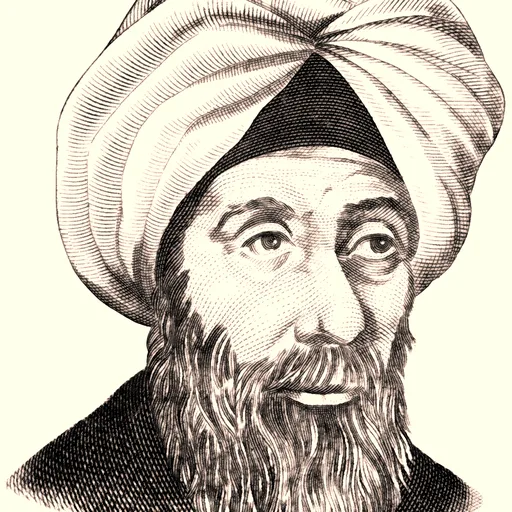
Ibn al-Haytham
Iraq 0965-01-01 ~ 1039-01-01
Tenth- and eleventh-century Arab mathematician and physicist
Founded modern optics by proving vision results from light entering the eye
Pioneered the scientific method of hypothesis and experiment centuries before the European Scientific Revolution
Arab mathematician and physicist born in 965 in Basra who founded modern optics by proving that vision results from light entering the eye, not rays emanating from it. A pioneer of the scientific method.
What You Can Learn
Ibn al-Haytham's insistence on questioning authority and testing claims experimentally is the foundation of modern scientific practice and data-driven business decisions. His systematic approach, forming hypotheses, designing experiments, and drawing conclusions, prefigures the lean startup's build-measure-learn cycle. And his cross-disciplinary range shows the value of combining physics, mathematics, and anatomy to solve a single problem.
Words That Resonate
The seeker after truth is not one who studies the writings of the ancients and, following his natural disposition, puts his trust in them, but rather the one who suspects his faith in them and questions what he gathers from them.
The duty of the man who investigates the writings of scientists, if learning the truth is his goal, is to make himself an enemy of all that he reads.
Truth is sought for its own sake. And those who are engaged upon the quest for anything for its own sake are not interested in other things.
Life & Legacy
Ibn al-Haytham (Alhazen) laid the foundations of modern optics and is widely regarded as one of the earliest practitioners of the scientific method. His Book of Optics overturned the ancient emission theory of vision and introduced systematic experimentation as the arbiter of truth.
Born in 965 in Basra (present-day Iraq), he received a broad education in mathematics, physics, and medicine. He moved to Cairo under the Fatimid caliph al-Hakim, reportedly to work on a Nile flood-control project that proved impractical.
His masterwork, Kitab al-Manazir (Book of Optics), written around 1011-1021, demonstrated that vision occurs when light reflects from objects and enters the eye, refuting the emission theories of Euclid and Ptolemy. He described the camera obscura, analyzed reflection and refraction, and studied the anatomy of the eye.
What distinguishes Ibn al-Haytham is his method. He insisted that claims must be tested through experiment and observation, and that the investigator must question received authority. He wrote that the seeker of truth must make himself an enemy of all that he reads, subjecting every claim to critical examination.
His optical work was translated into Latin as De Aspectibus and profoundly influenced Roger Bacon, Kepler, and the development of European optics. He also contributed to number theory, wrote on astronomy, and attempted to prove Euclid's parallel postulate.
He died in Cairo around 1040. His emphasis on experimentation over authority qualifies him as a forerunner of the Scientific Revolution, and his optics remained the standard reference for six centuries.
Expert Perspective
Among scientists, Ibn al-Haytham is the father of optics and a pioneer of the scientific method. His refutation of the emission theory of vision was a paradigm shift, and his experimental methodology anticipated the European Scientific Revolution by several centuries. His work bridged ancient Greek knowledge and medieval European science through the Islamic scholarly tradition.