Artists / Impressionism
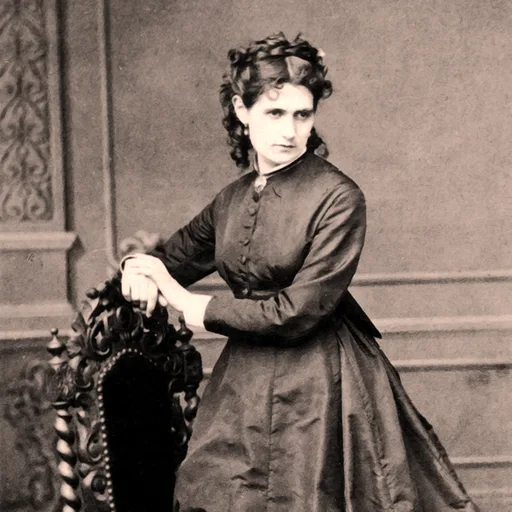
Berthe Morisot
France 1841-01-14 ~ 1895-03-02
French Impressionist painter born in 1841, a founding member of the group
Captured domestic light and intimate scenes with spontaneity matching Monet's landscapes
Her persistent excellence in the face of institutional dismissal demonstrates that sustained quality transcends bias
Born in Bourges in 1841, Morisot was a founding Impressionist and its most prominent woman painter. Her luminous domestic scenes capture light with spontaneity matching Monet's landscapes.
What You Can Learn
Morisot offers lessons in persistence. Her consistent quality in the face of institutional dismissal demonstrates that sustained excellence is the most effective response to bias. Her transformation of domestic subjects into formally adventurous paintings shows that innovation can happen in any domain, not only in traditionally prestigious ones. And her career reminds organizations that talent pools are larger than gatekeepers imagine.
Words That Resonate
The only thing I care about is my painting.
Le rêve de ma vie est de peindre la lumière.
It is important to express oneself, provided the feelings are real and taken from your own experience.
Il est vrai que je ne cherche pas à faire ce que d'autres font mieux que moi.
I do not think any man would ever treat a woman as an equal, and it is all I ask.
Je saisirai quelque chose de ce qui passe, quelque chose seulement, la moindre des choses.
Life & Legacy
Berthe Morisot was a founding member of the Impressionist group and its most consistently active woman participant, exhibiting in seven of the eight Impressionist exhibitions. Her luminous paintings of domestic life, gardens, and figures on terraces bring the same freshness to interior subjects that Monet brought to water and sky.
Born January 14, 1841, in Bourges to a senior government official, she received art instruction alongside her sister Edma. Both studied under Corot, absorbing his silvery tones and atmospheric approach. Edma abandoned painting after marriage; Berthe persisted.
She met Manet in 1868 and modeled for several of his works, including The Balcony. She married his brother Eugene Manet in 1874. Her position within this circle gave her access to the avant-garde, but her art was entirely her own.
Her brushwork is among the freest in the Impressionist group: rapid, sketchy strokes that dissolve form into light. Paintings like The Cradle and Summer's Day capture fleeting moments of feminine experience, a woman watching her sleeping infant, girls boating on a lake, with a directness and spontaneity that matched any of her male colleagues.
She faced the double challenge of being taken seriously as a woman artist and of painting subjects, domestic and maternal scenes, that critics sometimes dismissed as minor. Yet her formal adventurousness, particularly in her late watercolors and pastels, demonstrates that subject matter does not determine artistic ambition.
She died March 2, 1895, at fifty-four. Her death certificate listed her occupation as none, a final institutional slight. Recognition has grown steadily since; she is now acknowledged as one of the central figures of Impressionism.
Expert Perspective
Morisot is a founding Impressionist whose luminous domestic scenes match the formal freshness of her male colleagues' landscapes. Her rapid brushwork and atmospheric sensitivity place her among the movement's most adventurous practitioners. Her career challenges the assumption that subject matter determines artistic seriousness.