Artists / Renaissance
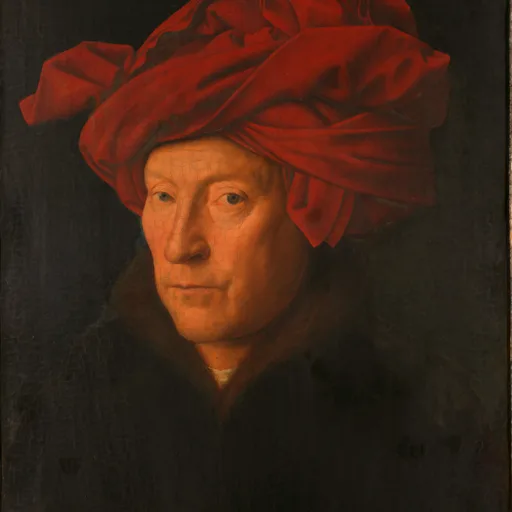
Jan van Eyck
Belgium 1390-01-01 ~ 1441-06-09
Flemish painter born around 1390, a founder of the Northern Renaissance
Perfected oil painting in the Ghent Altarpiece with microscopic detail and luminous color
His mastery of a new medium created a lasting advantage, modeling how technical innovation drives enduring creative leadership
Born around 1390 in the Low Countries, Van Eyck perfected oil painting technique. The Ghent Altarpiece dazzles with microscopic detail and luminous color, founding the Northern Renaissance.
What You Can Learn
Van Eyck offers a foundational lesson: mastering a new medium can create lasting competitive advantage. His oil painting technique gave Northern art capabilities tempera could not match. The Ghent Altarpiece's microscopic detail demonstrates that obsessive attention to finish creates enduring value. And his dual role as painter and diplomat shows that creative skills can serve strategic purposes beyond the studio.
Words That Resonate
A painting is never finished; it simply stops in interesting places.
Ars longa, vita brevis.
As I can, but not as I would.
Als Ich Kann
Detail is the soul of art.
Johannes de Eyck fuit hic.
Life & Legacy
Jan van Eyck is one of the most consequential artists in Western history because he perfected oil painting as a medium, achieving a luminosity, detail, and depth of color that no previous technique could match. His innovations made possible the entire tradition of Northern European painting.
Born around 1390, probably in Maaseik in the Prince-Bishopric of Liege, he served as court painter and diplomatic agent for Philip the Good, Duke of Burgundy. His diplomatic missions included a trip to Portugal to paint the portrait of the Duke's future bride.
The Ghent Altarpiece (completed 1432), created with his brother Hubert, is the founding monument of Northern Renaissance painting. Its panels depict scenes from the Adoration of the Mystic Lamb with a microscopic precision that renders individual blades of grass, the glint of gemstones, and the texture of brocade with hallucinatory clarity. The altarpiece has been called the most stolen artwork in history, having been looted by Napoleon, the Nazis, and others.
His secular works are equally groundbreaking. The Arnolfini Portrait (1434) is one of the most debated paintings in art history: the convex mirror on the back wall reflects the entire room including two figures entering, a virtuosic demonstration of optical mastery. Whether the painting documents a marriage, a legal contract, or something else remains contested.
Van Eyck's technique involved building up thin, translucent layers of oil paint over a light ground, allowing underlying layers to glow through. This created a depth and richness of color that tempera could not achieve, and his method spread rapidly through Northern Europe.
He died around July 9, 1441. His motto, Als ik kan (As I can), inscribed on several paintings, expresses a modesty belied by his supreme technical command. His influence on Durer, Memling, and the entire Northern tradition is immeasurable.
Expert Perspective
Van Eyck perfected oil painting technique, founding the Northern Renaissance tradition. The Ghent Altarpiece is a monument of microscopic precision and luminous color. The Arnolfini Portrait demonstrates optical mastery. His layered oil technique spread through Northern Europe and influenced Durer, Memling, and the entire tradition.